
 By
By 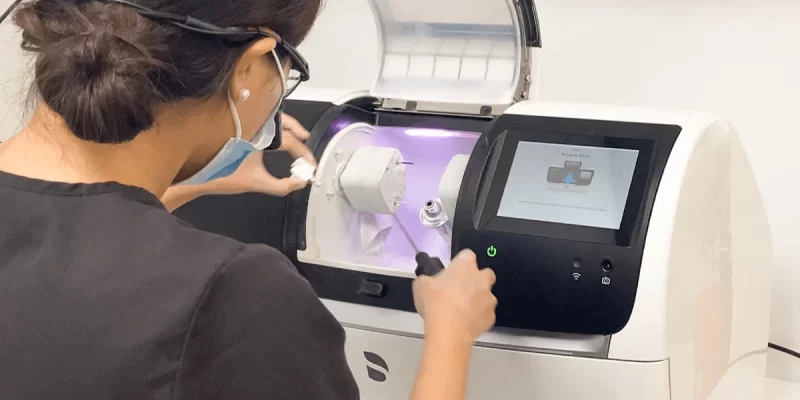
You might remember a time when a dental visit meant a quick exam, a few X rays, and a lot of waiting. Now, many patients walk into a practice and notice that things feel different, especially when exploring options for cosmetic dentistry in west Houston. Images appear on a screen in seconds, crowns can be planned with more precision, and your dentist may spot trouble earlier than before. If that shift feels a little hard to keep up with, you are not alone. Dental care is changing fast, and it is normal to wonder what these tools mean for your comfort, your safety, and your costs.
The short version is simple. Today’s dental technology trends are helping general dentistry become more precise, more efficient, and often easier on patients. From digital imaging to computer guided design, these tools can support better decisions and smoother treatment. Still, every technology has a purpose, a cost, and a time when it makes sense. Knowing the difference can help you ask better questions at your next appointment.
Why do so many new tools matter in general dentistry now?
General dentist visits are often about small problems before they become large ones. That sounds simple, but it puts a lot of pressure on early detection. A tiny cavity, a crack in a tooth, or bone changes under the gums can be easy to miss with older methods. Because of that, new systems are not just about speed. They are about seeing more clearly and planning treatment with fewer surprises.
So, what are the six technologies shaping care today? First, digital X rays. These produce images quickly and can make it easier to enlarge and review details. Second, cone beam CT, which gives a 3D view in certain cases. The FDA explains dental cone beam computed tomography as a tool that can support treatment planning when a three dimensional image is needed. Third, intraoral scanners, which create digital impressions without the mess many people dislike. Fourth, CAD and CAM systems, which help design and sometimes make restorations with a close fit. Fifth, dental lasers, which are cleared for specific soft tissue and hard tissue uses, with device information available through the FDA dental laser classification database. Sixth, data driven and AI supported tools that help organize images and records, an area the NIDCR describes in its overview of data science and digital dentistry.
That sounds promising, but it can also raise a fair question. If all of this is available, does every patient need it? Usually, no. Good care still depends on judgment. A routine cleaning does not need every advanced tool. A complex implant plan or a hard to diagnose bite issue may benefit from them. The value is not in using more technology. The value is in using the right one at the right time.
How can these technologies change what you feel in the chair?
For many people, the stress of dental care is not only about pain. It is also about uncertainty. You do not always know what the dentist sees, how long treatment will take, or whether the result will last. New technology can reduce some of that tension by making treatment more visible and more predictable.
Take intraoral scanners as an example. If you have ever sat through a traditional impression, you may remember the thick tray material and the urge to gag. A scanner can often replace that with a small wand and a digital model. Or think about digital X rays. Because the images appear fast and can be enlarged, your dentist can show you the exact area of concern rather than asking you to trust a vague explanation.
Modern general dentistry technology can also help with planning. A 3D scan may reveal bone shape before an extraction or implant discussion. CAD and CAM systems can help a restoration fit better from the start. Laser tools may support certain procedures with less bleeding in some cases. None of this means every visit becomes effortless, but it can mean fewer unknowns, and that matters more than people sometimes realize.
What are the tradeoffs of today’s dental innovations?
It helps to look at the benefits and limits side by side, especially if you are weighing treatment options or trying to understand fees. Technology can improve care, but it may also add cost in some offices, and it still depends on the skill of the team using it.
| Technology | Common Benefit | Possible Limit or Concern | When It Often Helps Most |
|---|---|---|---|
| Digital X rays | Fast images, easier to view details | Still involves radiation, though use is controlled and targeted | Routine exams, cavity checks, follow up visits |
| Cone beam CT | 3D view for planning | Not needed for every case | Implants, complex extractions, certain jaw concerns |
| Intraoral scanners | More comfortable digital impressions | May not replace every traditional method in every case | Crowns, aligners, bite records |
| CAD and CAM | Precise design, sometimes faster restoration delivery | Equipment costs may affect pricing | Crowns, inlays, onlays |
| Dental lasers | Useful for selected tissue procedures | Not a substitute for every traditional technique | Gum contouring, selected soft tissue care |
| Data and AI tools | Better record review and pattern support | Needs careful oversight by the dentist | Diagnosis support, treatment planning, tracking changes |
So, where does that leave you? In a better place if you stay curious. The best results usually come when technology supports clinical judgment rather than replacing it. That is true across general dentistry, whether you need preventive care or a more involved restoration.
What can you do right now to make smarter dental decisions?
- Ask what problem the technology is solving. If a scan or tool is recommended, ask why it is needed for your case. A clear answer should connect the tool to a decision, such as finding decay, checking bone, or improving the fit of a crown.
- Ask about comfort, safety, and cost together. Patients often ask only about price, or only about pain. Try all three. Ask whether the tool changes how the procedure feels, whether there are safety guidelines involved, and whether it affects the total fee.
- Ask to see what your dentist sees. One of the biggest strengths of advanced dental tools is that they can make your condition easier to understand. If there is an image, scan, or model, ask for a simple explanation while looking at it together.
What should you take away from all of this?
If dental care feels more technical than it used to, that does not mean it has to feel more confusing. The best technology in a general dentist office should do one thing above all else. It should make your care clearer, safer, and more tailored to what you need. When a practice uses these tools with care and good judgment, you are more likely to get treatment that feels thoughtful instead of rushed.
You do not need to know every device name before your next visit. You just need to know that asking questions is reasonable, and understanding your options is part of good care. That alone can make the whole experience feel more manageable.






Comments